A fossil in the wrong place
Our $1,000 fossil contest
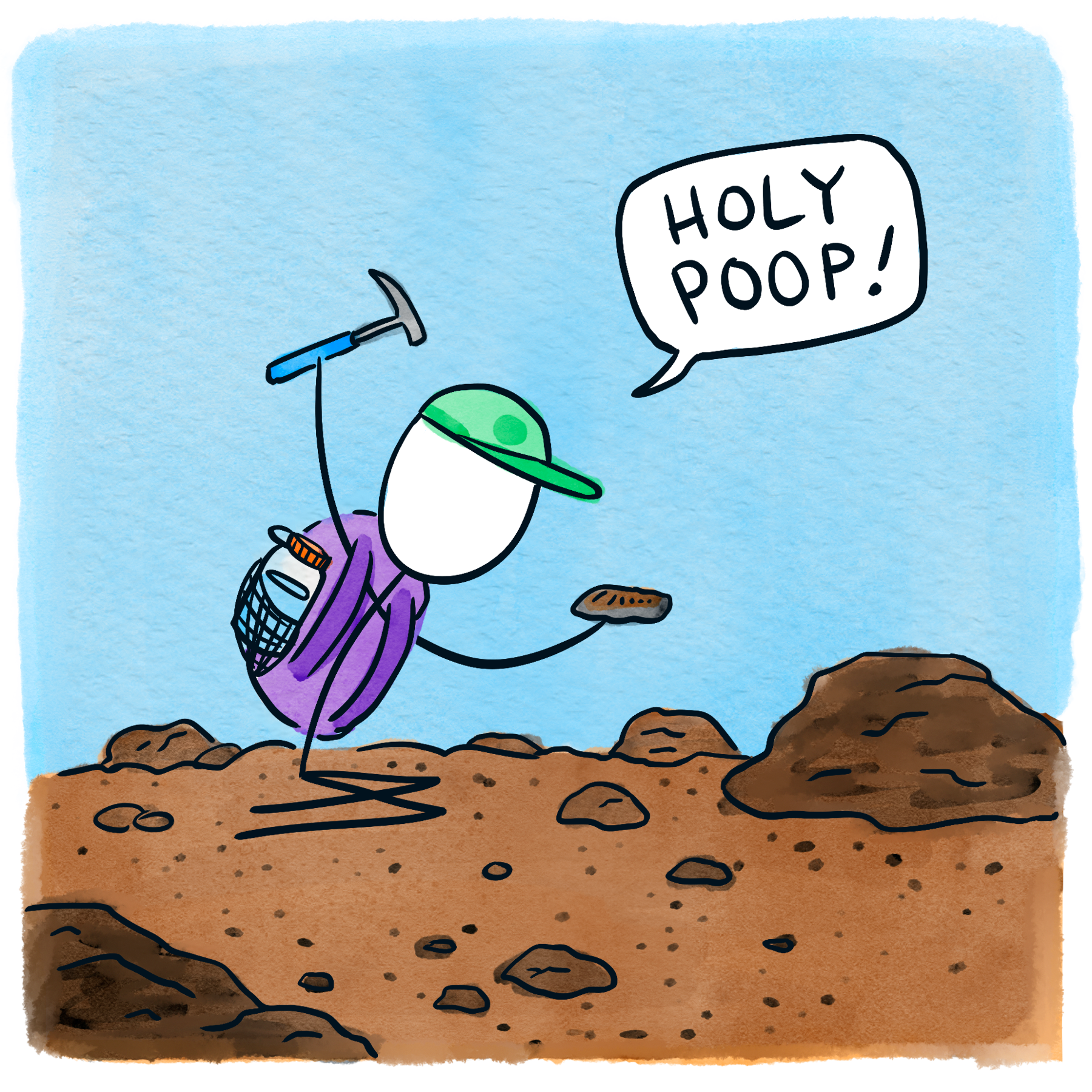
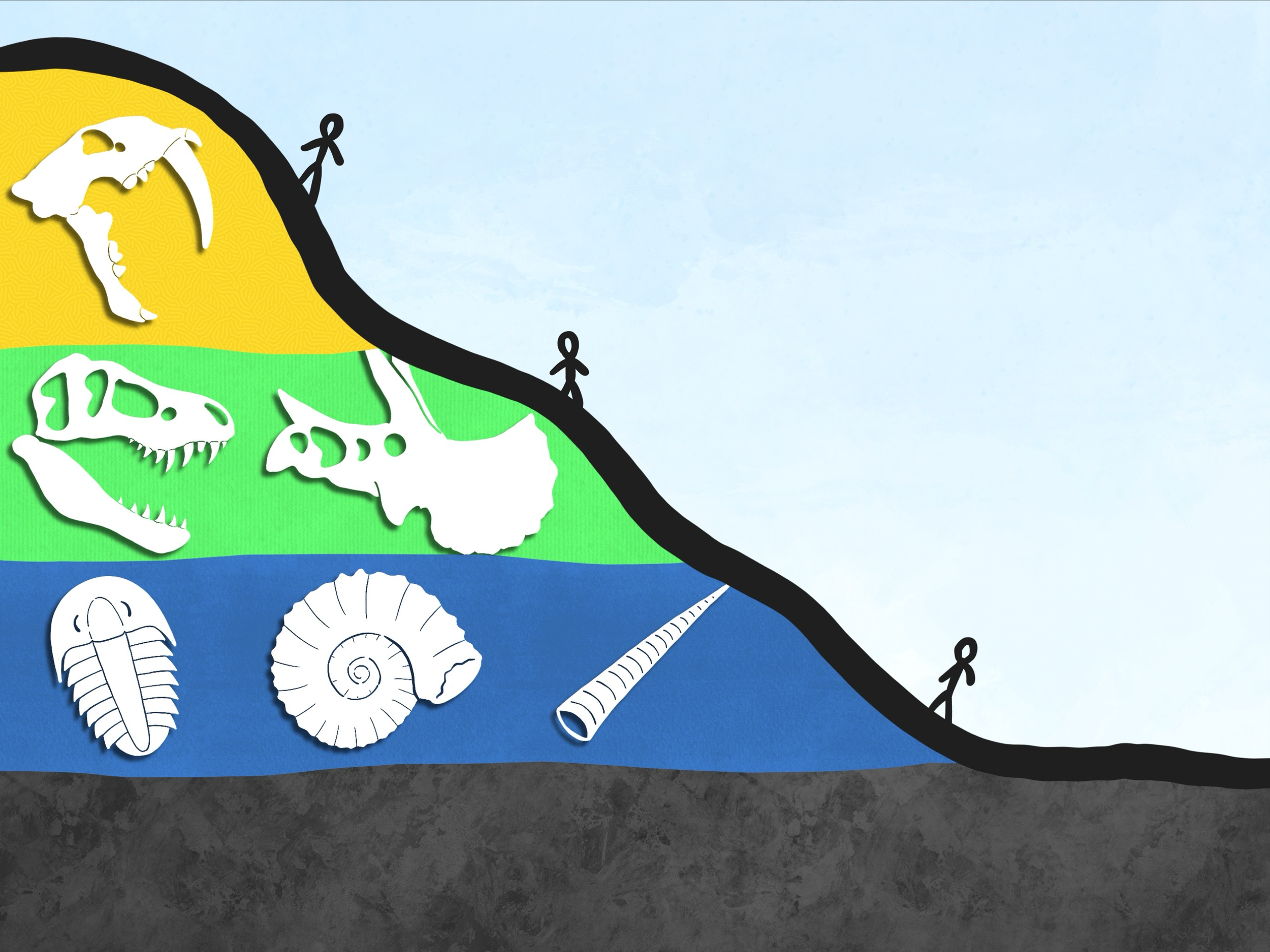
People find fossils all the time… but only in particular layers of rock.
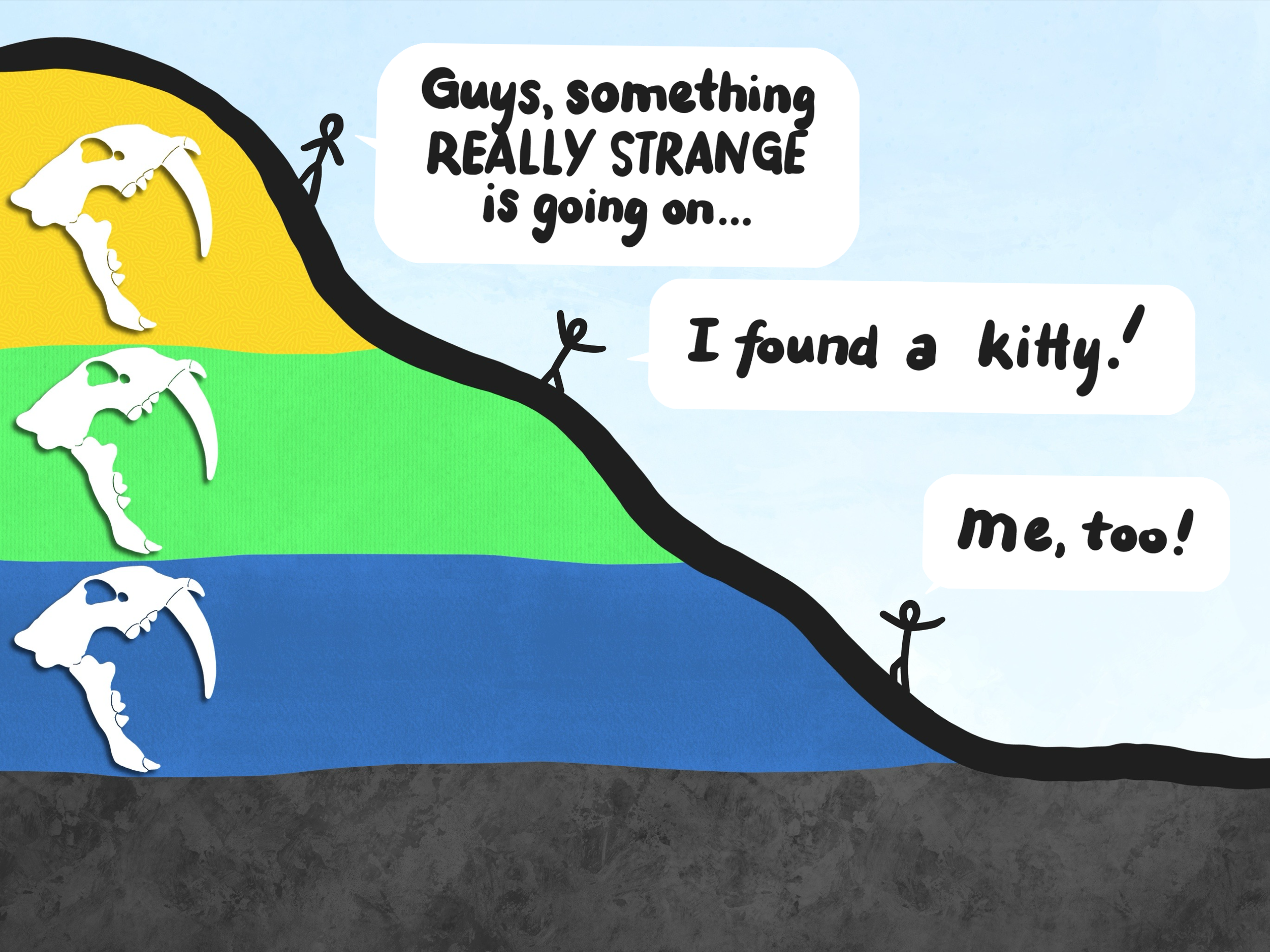
Saber-toothed cats? Only in the Cenozoic.
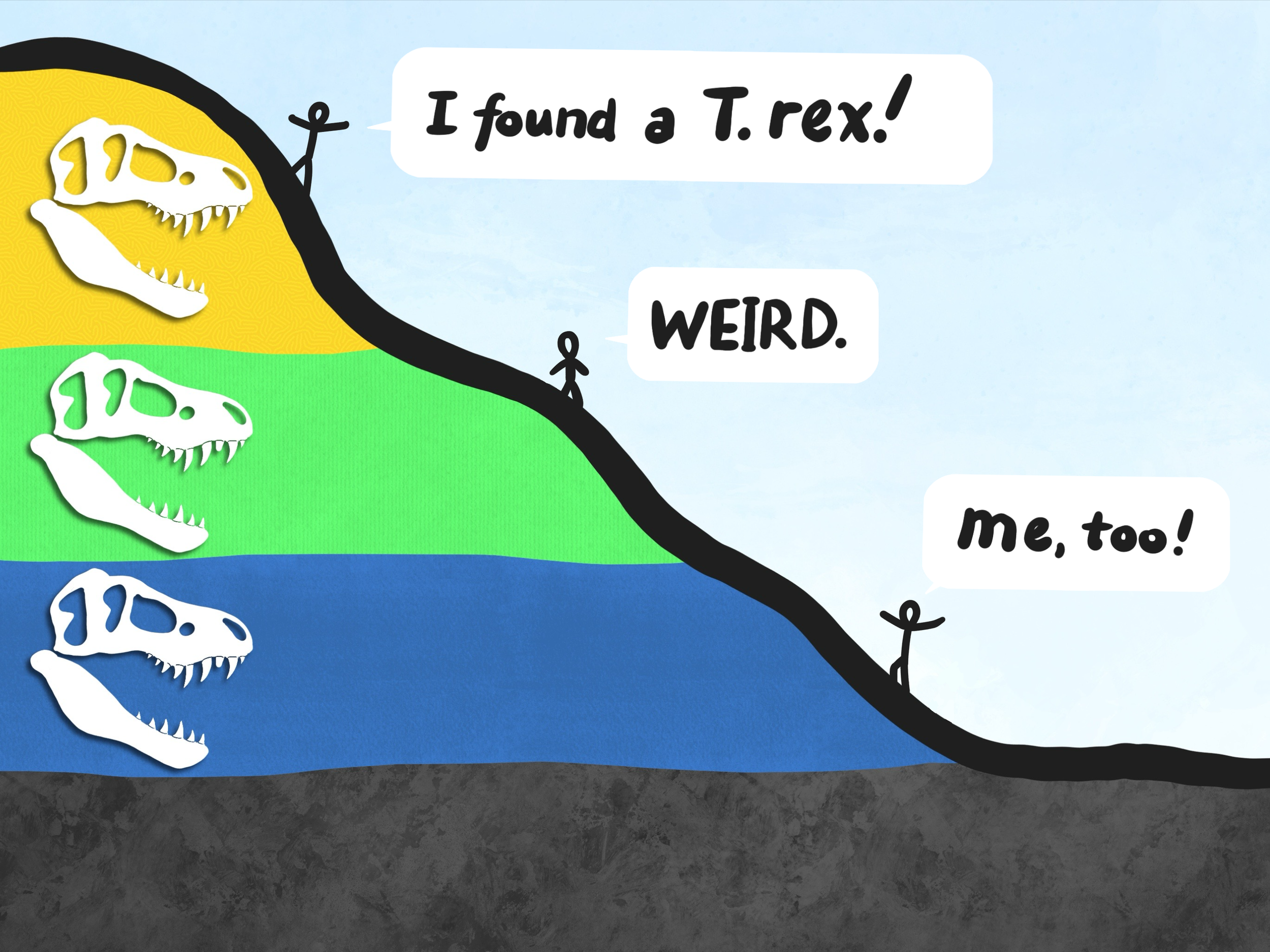
T. rex? Just the Mesozoic.
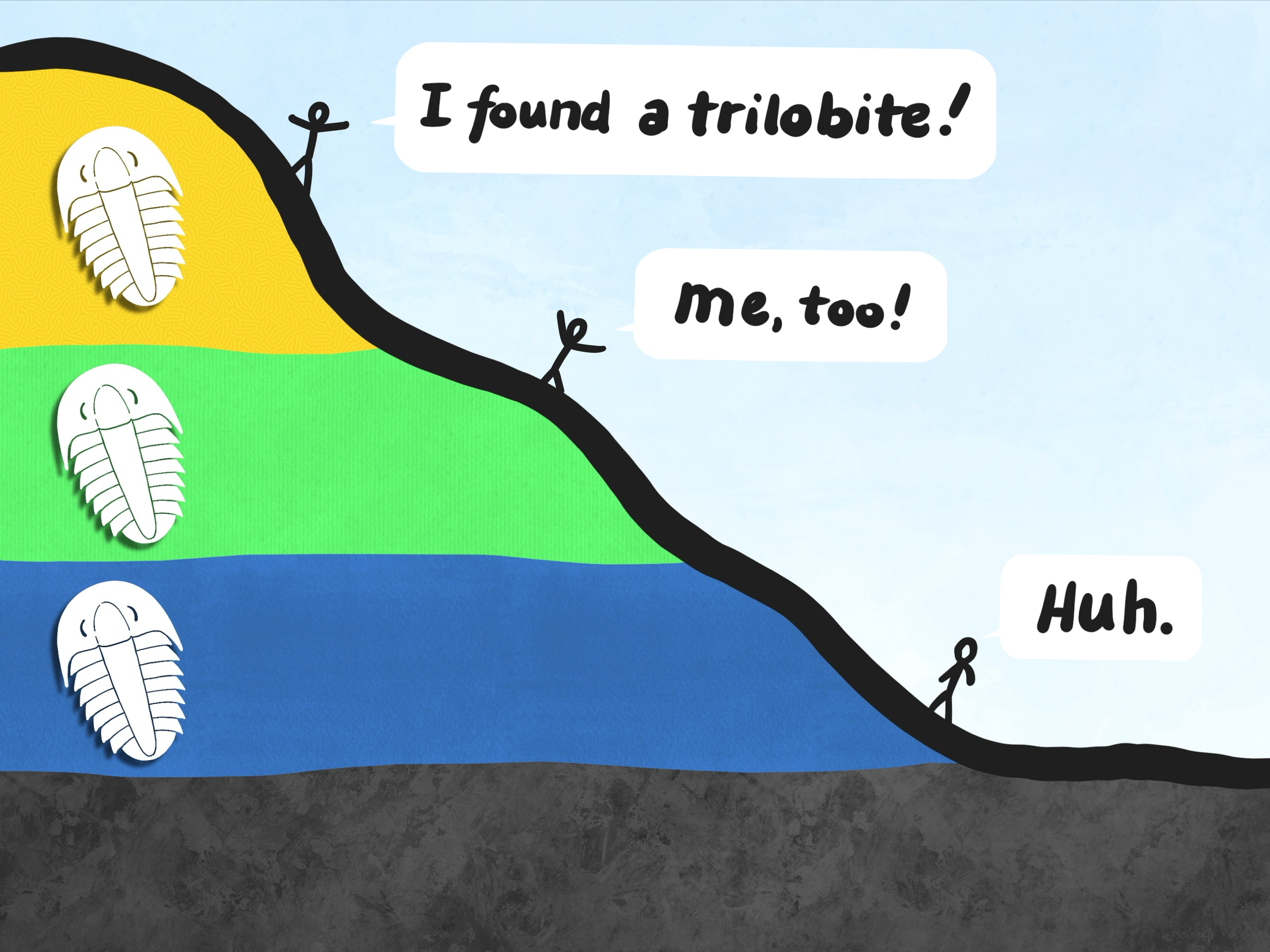
Trilobites? The Paleozoic — and never anywhere else.
Even before Darwin, this pattern was some of the most powerful evidence for evolution. But the fun thing about science is that even one piece of good evidence can make us question everything we thought we knew.
Science is WEIRD is strongly pro-evolution — we use it to help make sense of everything in biology. But we also strive to stay open to the fact that we might be wrong! This, of course, is how science works. So we’re launching our “Fossil in the Wrong Place” contest to show kids how ideas get stronger by risking failure.
If you find a fossil in a very wrong place, you’ve at least made an exciting discovery… and you might have disproved evolution entirely.
The Rules
If you find a fossil in a very wrong place, and can show it, you win $1,000.
Q: What counts as “a very wrong place”?
A rock layer where the fossil would surprise (or even shock) a paleontologist. For this contest, that means a layer from a geological period where that genus of animal, plant, or fungus had not been found before.
Q: How do I know what the geological period of rock is around me?
Geologists have already mapped most of this. There’s a quick way to check:
Go to rockd.org
Click on “Explore the data” (or download the app)
Zoom in on where you live
Tap the screen
A box like this will come up:
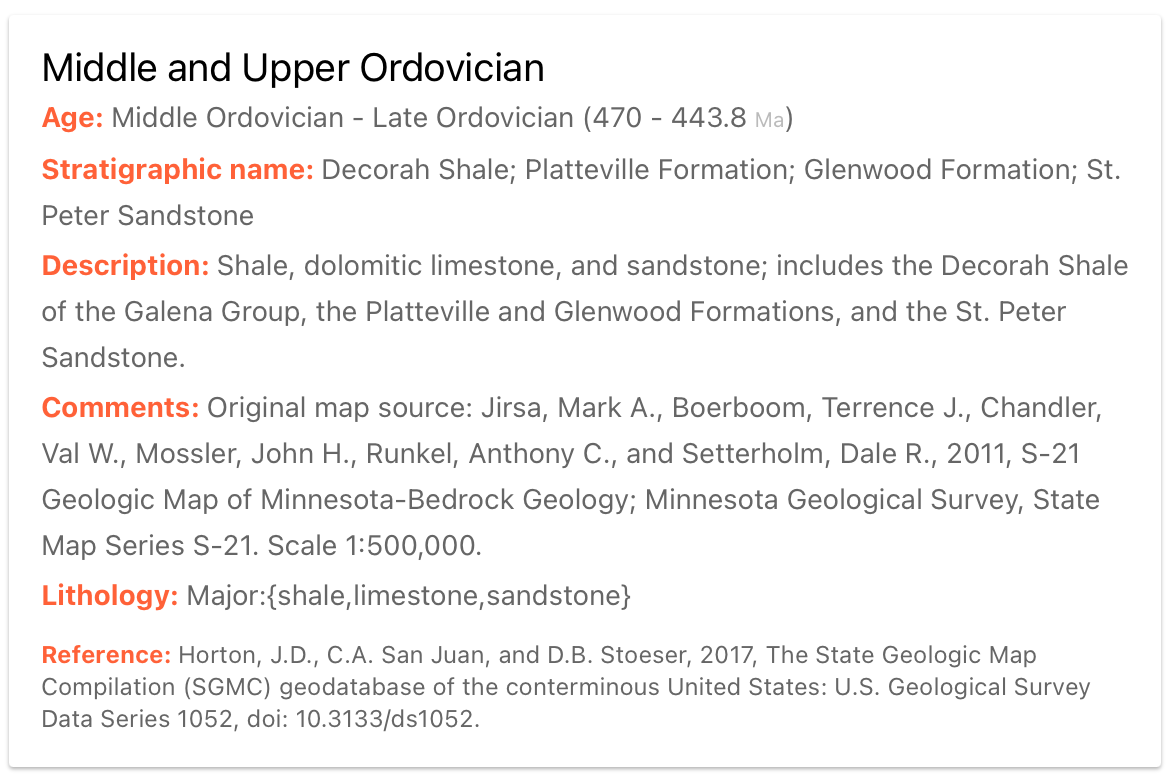
Unhappily, that’s in geologist-speak. Happily, we have AI!
Screenshot it, upload that to an AI like ChatGPT and Claude, and ask it to explain your local rock layer in plain English:
“Can you explain this like I’m 5?”
“Walk me through everything it says, but explain it in vivid language. Help me understand this as a story.”
“Imagine I was there when this layer was being laid down. What might I be seeing?”
Q: How do I know which fossils are not supposed to be there?
First, figure out what fossils are supposed to be there. AI can help with that:
“I’m going to look for fossils in this layer. What might I hope to find?
“Please show me some artists’ illustrations of what the animals looked like when they were alive, and photos of what their fossils look like now. (And tell me how big these are.)”
Then ask for the opposite:
“Which fossils, if I found them here, might disprove evolution?”
You’ll get a list, and can start from there.
Q: I don’t trust AI. Is there another way?
There is.
On Wikipedia, every organism has a little “taxobox”. It lists the organism’s common name, its scientific name, and so on. Most extinct organisms also have a fossil range bar:
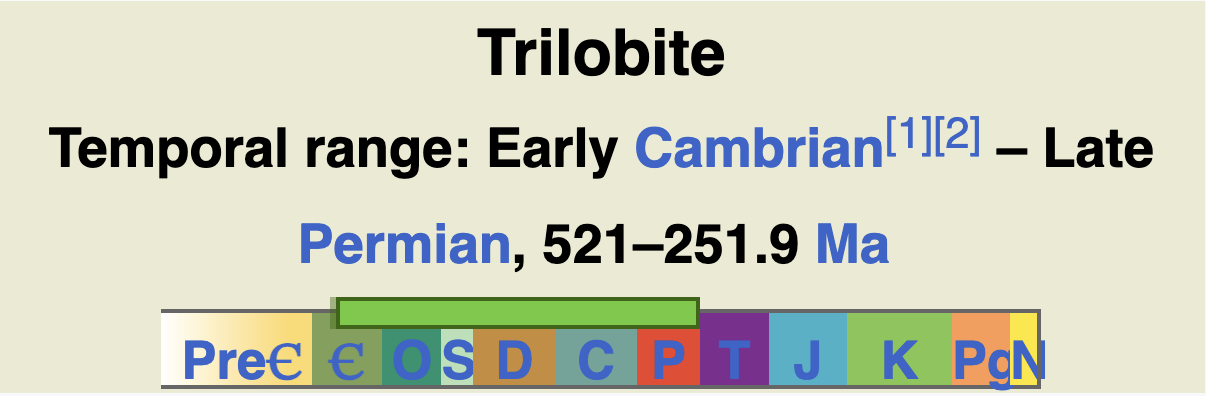
The green bar is the span of where trilobite fossils have already been found. The slim shaded extension right before it is when scientists suspect they might have lived.
Our contest is about finding fossils in times that would shock a paleontologist. Wikipedia isn’t a final authority, but it’s a good place to get oriented.
Q: If I win, what do I get?
$1,000 USD will go to the first person who can prove they’ve done this.
Q: If I win, will I have disproven evolution?
It depends on what you find.
Finding a trilobite in the early Mesozoic wouldn’t overturn evolution. (Some might have survived longer than we thought.) But it would surprise scientists and likely lead to a peer-reviewed article. You’d be geek-famous! And you’d still win the $1,000.
A rabbit in the Precambrian, on the other hand, would shock scientists. (At that time, the most complex animals were microscopic worm-like creatures.) Paleontologists and geologists would swarm the site.
One piece of evidence rarely changes everyone’s mind overnight. But it could be the beginning. Anti-evolutionists would suddenly have strong evidence to build on.
Q: Can multiple people win?
No: only the first person to meet the win conditions.
Q: When will the winner get their prize?
We’re not paleontologists, so we can’t judge the science ourselves. But we can help you get the attention of local experts.
The contest is officially won when the discovery is published in a peer-reviewed journal.
Q: Should I remove the fossil if I find something amazing?
Probably not. Disturbing the rock layers can destroy the evidence you need to prove a shocking claim. Pulling the fossil out may ruin your chances of winning. Start snapping pictures and seeing if you can identify the fossil. Contact us if you need help.
Q: Who can join the contest?
For now, it’s open only to families who have participated in Science is WEIRD. In the future, we might open it up to others.
Q: How do I even look for fossils?
We’ll be talking a little about this in Hills, lesson 4. You can also:
Visit The Fossil Forum
Watch YouTube-related fossil-hunting videos,
Search Google Maps for fossil-finding tours near you
Q: When does this contest end?
August 4th, 2032.